Some memories aren't meant to be kept
The cottage looked smaller than I remembered. Thirty years will do that to a place, or maybe to a person. Gran’s roses had gone wild, throttling the front gate in thorns thick as my thumb. The key still hung where she’d always kept it—under the painted stone frog by the door. Some things never change in Devon. Others disappear entirely.
I’d driven down from London to clear out her things. The solicitor had been clear: the house was mine now, along with everything in it. What he hadn’t mentioned was how the place would feel like walking into a photograph with half the faces scratched out. I knew this kitchen, these crooked stairs, the way the floorboards sang in the hallway. But the knowing felt borrowed, like someone else’s clothes that almost fit.
The first box I opened in the sitting room held school photographs. There I was at seven, gap-toothed and grinning. Eight, nine, ten. Then nothing until I was thirteen, suddenly taller, serious-faced, standing apart from the other children. Three years missing. I stared at that gap like it might explain itself.
Must have been when you were poorly, love. Don’t you remember?
Gran's voice, from somewhere in my head
But I didn’t remember being ill. I didn’t remember much of anything from those years, now that I thought about it. Just fragments: the taste of bitter tea, the sound of voices through walls, the feeling of being watched. The rest was white noise.
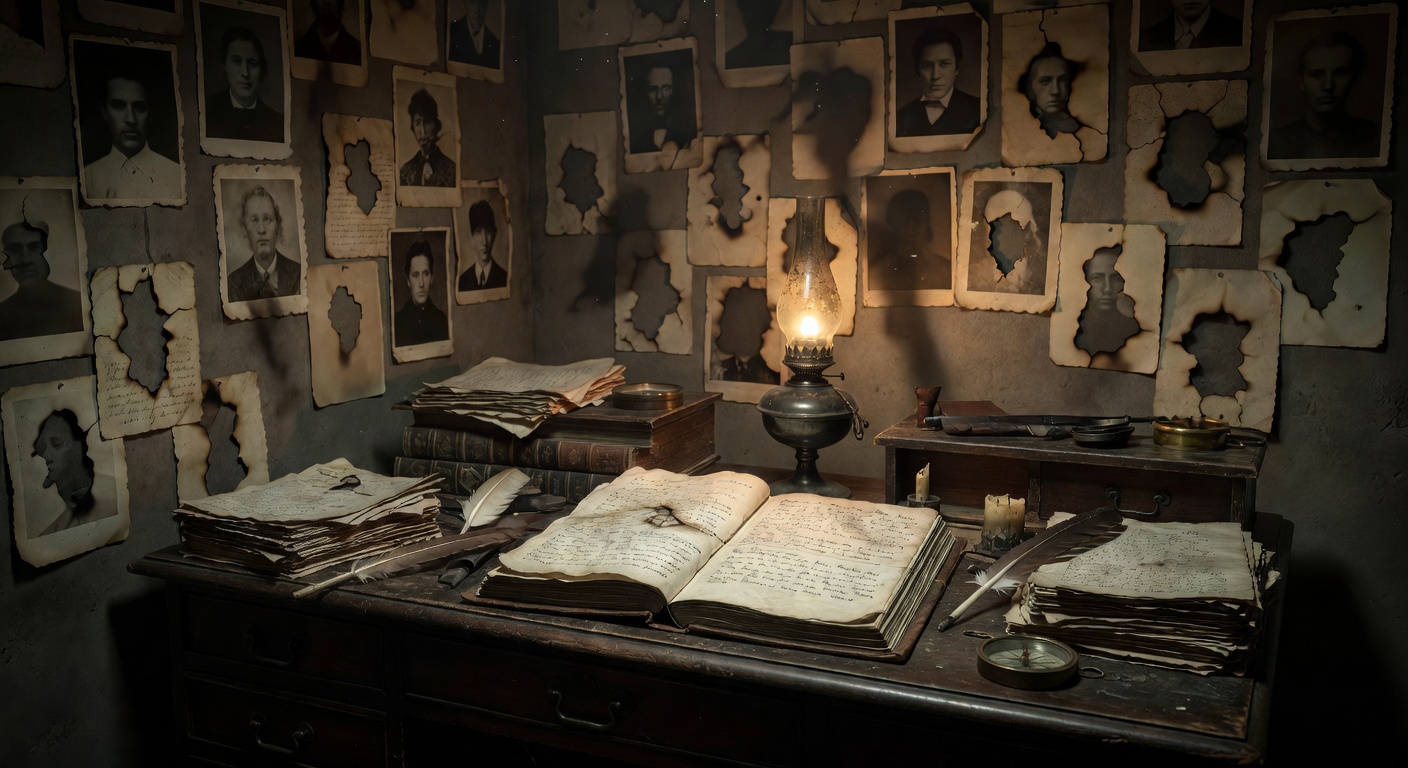
The Remembering Room
The door to Gran’s study had always been locked when I was small. Now it opened with the same key that fit the front door. Inside, the walls were covered in photographs, hundreds of them, dating back decades. Generations of faces stared down at me, but something was wrong. In photo after photo, people were missing. Cut out. Scraped away. Burned out with cigarette ends.
A ledger sat open on the desk. Gran’s careful handwriting filled page after page, recording names and dates. ‘Thomas Hartwell – 1962 – taken.’ ‘Sarah Mills – 1978 – given.’ ‘Michael Cray – 1991 – forgotten.’ My name appeared on the last filled page: ‘James Hartwell – 1994 – borrowed.’ Borrowed. Not taken, not given. Borrowed.
I found the cellar door behind a bookshelf that moved easier than it should have. The stairs descended into darkness that felt older than the house above. At the bottom, a single bulb illuminated a room I’d never seen but somehow knew. Circle carved into the floor. Candle stubs around the edges. And in the center, a chair with leather straps worn smooth by use.
The memories came back then, not gently. I was ten years old, sitting in that chair while Gran spoke words in a language that predated English. The taste of copper pennies on my tongue. The feeling of something essential being pulled from my chest, thread by thread. And afterward, the blessed emptiness where the nightmares used to live.
It’s for your own good, James. Some things are too heavy for little minds to carry.
Gran, as she tightened the straps
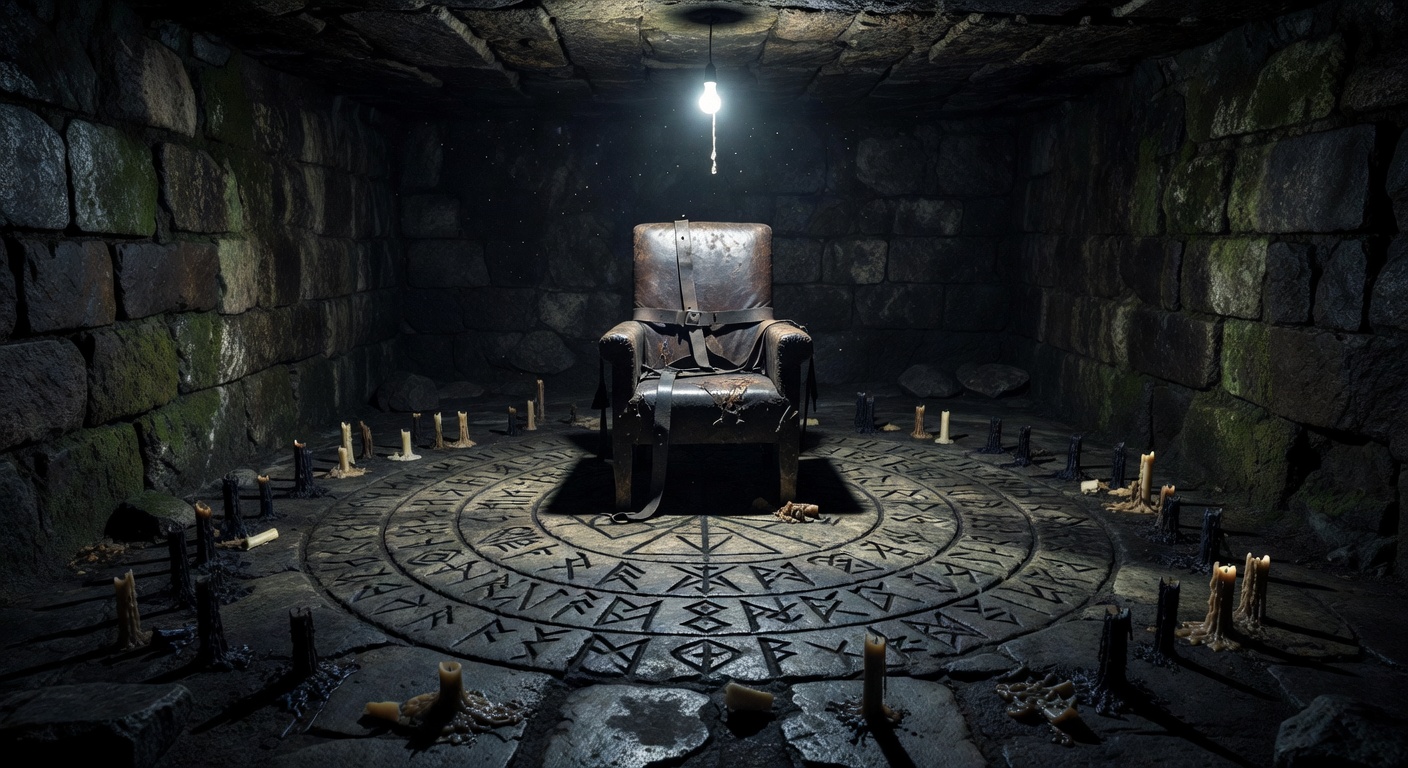
What Was Taken
The ritual had worked, mostly. Gran had pulled the trauma right out of me—the night I’d found my parents, the weeks after when sleep brought only blood and screaming. She’d stored it somewhere safe, she said. Locked it away where it couldn’t hurt me. But memory isn’t just trauma. It’s everything. Take out the bad and the good goes with it. I’d lost three years of my life to spare myself three hours of horror.
I understood now why so many faces had been cut from the photographs. Not destroyed—harvested. Gran had been the village’s unofficial memory-keeper, helping people forget their worst moments. But the memories had to go somewhere. They couldn’t simply disappear.
The house remembers what we choose to forget.
I could feel them now, pressing against the walls like water behind a dam. Decades of discarded pain, stored in the very foundations. The house fed on forgotten things, grew stronger with each extracted memory. And now Gran was gone, there was no one to tend the collection.
My phone buzzed. A text from my wife: ‘How’s the house? Missing you.’ I stared at the words until they blurred. Sarah. My wife of eight years. When had I last thought of her? When had I last remembered her face without looking at a photograph? The forgetting was starting again, but this time I hadn’t chosen it.
The Keeper's Choice
The house wanted a new keeper. I could feel it in the way the floorboards settled, the way shadows gathered in corners. All those stored memories needed someone to tend them, to feed them, to keep them from spilling back into the world. The role was mine by inheritance, by blood, by the simple fact that I was here and alone.
I tried to leave. Made it as far as the front gate before my keys disappeared from my pocket. My car wouldn’t start. My phone showed no signal. The house wasn’t done with me yet. It had tasted my memories once before and found them sweet. Now it wanted the rest.
Each night, I lost a little more. First the recent things—what I’d had for breakfast, the name of my editor, the plot of the last book I’d read. Then deeper cuts: my first kiss, my university graduation, the day I’d married Sarah. Soon I’d be like the faces in the photographs—present but not there, existing in the gaps between other people’s lives.
You could stay, love. Keep the memories safe. Keep the pain locked away where it belongs.
Gran's voice, clearer now
The cellar called to me. The chair waited, patient as a spider. I could sit down, let the house take what it wanted, become its willing keeper. No more pain, no more loss, no more weight of accumulated years. Just the blessed emptiness I’d tasted as a child, stretched out forever.
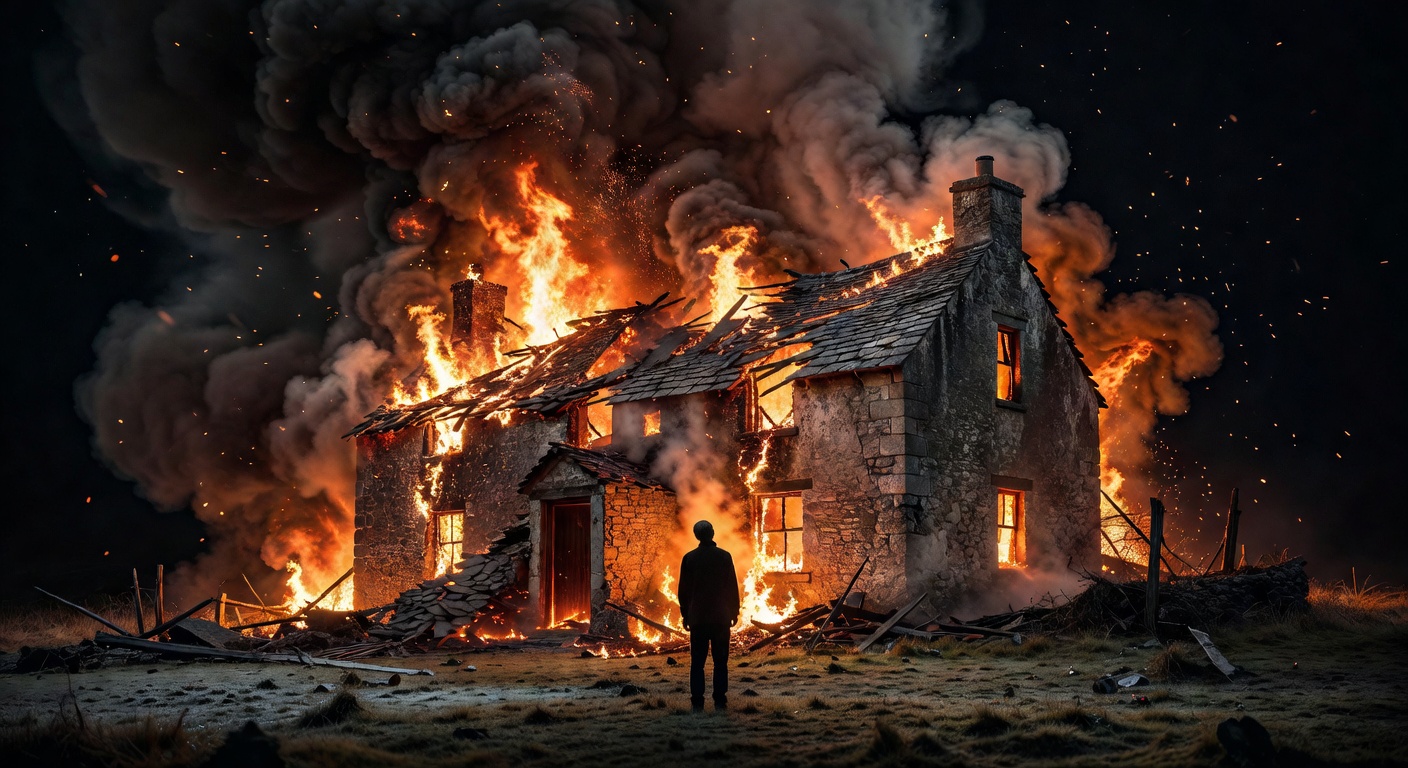
I chose differently. Took the ledger and Gran’s matches down to the cellar. Poured lamp oil over the chair, the carved circle, the walls that sweated with other people’s sorrows. The house screamed as I lit the match—not with sound but with something deeper, a vibration that shook my bones. All those carefully stored memories rushed back to their owners at once, decades of forgotten trauma flooding minds that had learned to live without it.
The fire spread faster than it should have, eager to consume what had been hidden for so long. I made it to the garden as the roof collapsed, watching sixty years of careful forgetting turn to ash and smoke. In the morning, investigators would find nothing but foundation stones and the smell of burnt roses. They’d ask questions I couldn’t answer, about a grandmother I was already beginning to forget.
But I remembered Sarah’s face when I called her. I remembered my parents, the good years before the bad night. I remembered being ten years old and choosing to forget, and now choosing to remember. Some burdens are too heavy to carry alone, but that doesn’t mean they should be buried. Pain shared is pain halved. Pain hidden is pain doubled.
The cottage is gone now, sold as a building plot to developers who’ll never know what stood there before. But sometimes, when I’m drifting off to sleep, I still taste copper pennies and hear Gran’s voice whispering about things too heavy for little minds. Some forgetting is natural. Some is necessary. And some is just another kind of haunting.
Glossary
Memory-keeper
A folk practitioner who extracts and stores traumatic memories from willing subjects
The Forgetting House
A cottage in rural Devon that feeds on extracted memories and requires a human keeper
Borrowed memories
Traumatic experiences temporarily removed from a person's mind but not destroyed
The Remembering Room
Gran's study containing photographs and records of memory extraction rituals
Harvested faces
People whose memories have been extracted, leaving gaps in family photographs
The Cellar Circle
Underground ritual space where memory extraction ceremonies took place
Memory flooding
The violent return of all stored memories to their original owners at once