Some foundations were never meant to be disturbed
Foundation Inspection
The Hartwell Building stood like a rotten tooth in downtown Providence, its red brick facade crumbling at the edges where ivy had worked its fingers into the mortar. I’d been hired to assess its structural integrity before the city condemned it outright. Forty-three years of property inspection had taught me to read buildings like medical charts—every crack, every sag, every water stain told a story. But some stories, I was about to learn, should stay buried.
Mrs. Chen from the city planning office had handed me the keys with obvious relief, as if she couldn’t wait to be rid of them. Built in 1892, the Hartwell had served as everything from a textile mill to a boarding house to, most recently, a failed artists’ collective. Now it sat empty, waiting for someone to decide its fate.
Just get me a report on whether it’s worth saving or if we should tear it down. The basement’s been sealed for years, but you’ll need to check it for structural damage.
Mrs. Chen
Sealed basement. That was the first red flag. In four decades of inspections, I’d learned that when someone seals off part of a building, there’s usually a reason. And that reason is rarely good.
Descent
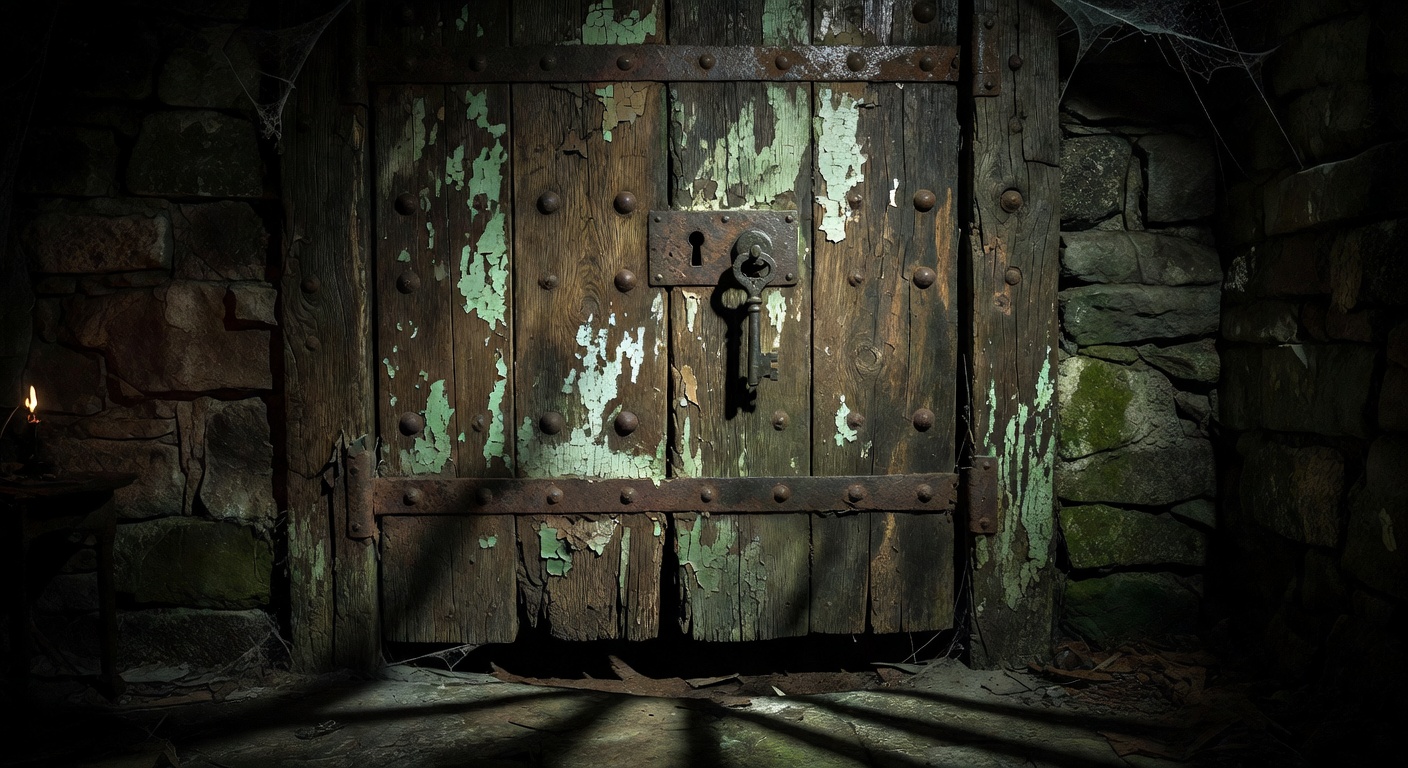
The main floors checked out well enough—solid timber framing, though the plaster was shot to hell and the electrical system belonged in a museum. But it was the basement door that gave me pause. Heavy oak planks, painted over so many times the original wood grain had disappeared entirely. Three separate deadbolts, each one different, as if they’d been added over the years by increasingly paranoid tenants.
The keys Mrs. Chen had given me included an old skeleton key that looked older than the building itself. It turned in the topmost lock with a sound like breaking bones. The other two locks were newer, standard hardware store fare, but they opened reluctantly, as if they’d been undisturbed for years.
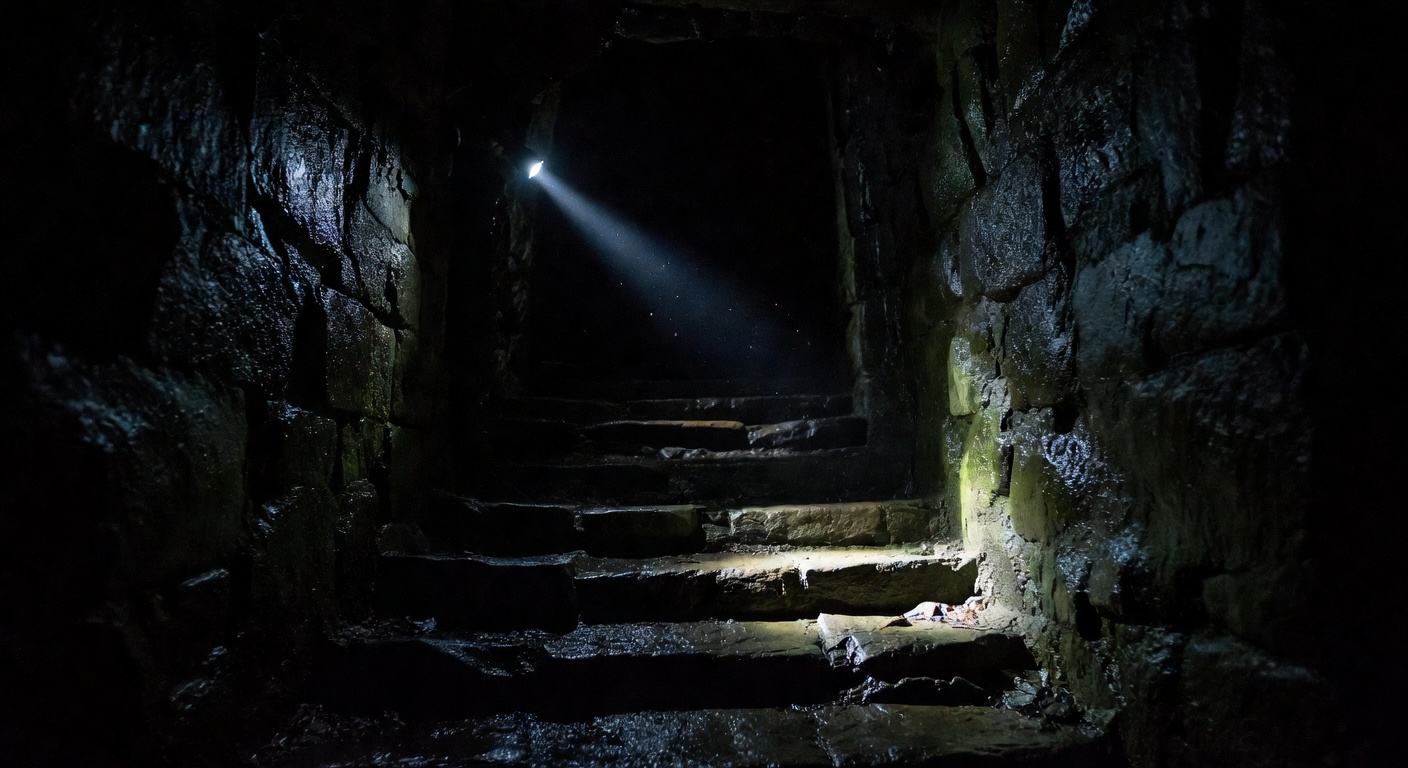
The door swung inward on hinges that screamed in protest. My flashlight beam cut through darkness thick enough to choke on, revealing stone steps that descended farther than they should have. The basement of a four-story building shouldn’t go down twenty feet, but these steps kept going, disappearing into black.
The air that rose to meet me carried the smell of old water and something else—something organic that had been left too long in the dark. I’d smelled worse in my time. Flooded basements, backed-up sewers, the occasional dead rat in the walls. This was different. This smell had weight to it, as if it had been accumulating for decades.
The Architecture of Secrets
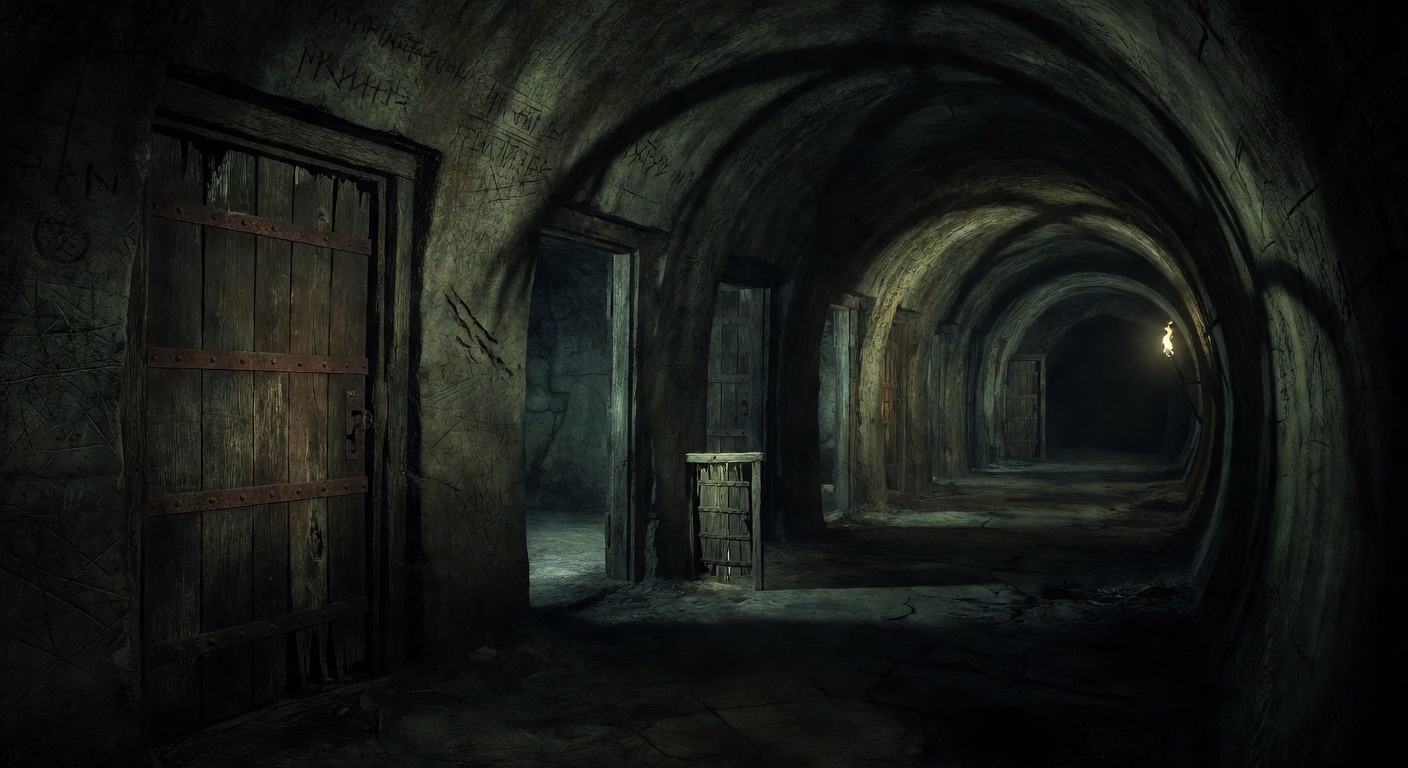
The basement was wrong from the moment I set foot on the stone floor. Not structurally wrong—the masonry was solid, the support beams were sound. Wrong in the way it had been designed. The ceiling was too low, barely six feet, forcing me to duck despite my modest height. The walls curved inward at odd angles, creating alcoves that served no purpose I could identify.
But it was the doors that made my skin crawl. Seven of them, set into the walls at irregular intervals, each one smaller than the last. The first was normal sized, though it opened onto a room no bigger than a closet. The second was child-sized. By the seventh, I had to get on my hands and knees to peer through the opening.
What the hell were they thinking when they built this place?
My own voice, echoing off stone
Each room was empty, but not abandoned. Swept clean. Maintained. Someone had been down here recently, keeping these spaces in pristine condition. The floors showed wear patterns, as if people had paced back and forth for hours. Or days. The smallest room—barely large enough for a child to lie down in—had scratch marks on the walls. Deep ones, made by fingernails.
Historical Records
I should have left then. Should have marked the basement as structurally sound and walked away. Instead, I found myself at the Providence Public Library the next morning, digging through historical records with the single-minded focus of a man who’d seen something he couldn’t explain.
The Hartwell Building’s history read like a catalog of human misery. Built by industrialist Marcus Hartwell in 1892, it had housed his textile workers in conditions that would make a modern slum lord blush. Overcrowded, under-ventilated, with families of six crammed into single rooms. The workers had been mostly immigrants—Irish, Italian, later Portuguese—people who had nowhere else to go.
PROVIDENCE JOURNAL - MARCH 15, 1895

FIRE AT HARTWELL MILL CLAIMS SEVEN

A blaze that started in the basement of the Hartwell Building on Federal Street claimed the lives of seven workers yesterday evening. The victims, all recent immigrants, were reportedly trapped in the lower levels of the building when the fire began. Mill owner Marcus Hartwell could not be reached for comment.

City Fire Marshal Thomas O'Brien noted unusual construction in the basement level that may have contributed to the deaths, but declined to elaborate pending further investigation.
That investigation, according to the records, had been quietly dropped. Hartwell had connections, money, influence. The fire was ruled accidental. The basement was sealed, and the building continued operating for another decade before Hartwell sold it and disappeared from Providence society entirely.
The Pattern
But the deaths hadn’t stopped with the fire. Every few years, someone connected to the Hartwell Building died under mysterious circumstances. Workers who disappeared in the middle of their shifts. Tenants who were found dead in their rooms with no obvious cause. Children who went missing and were never found.
The pattern was subtle enough that no one had connected the dots. Different owners, different decades, different circumstances. But always the same building. Always the basement that stayed sealed, no matter who owned the property or what they used it for.
I returned to the Hartwell that evening with a different set of tools. Not a property inspector’s clipboard and measuring tape, but a camera, a portable light, and a crowbar. If there were answers to be found, they were in that basement. In those impossibly small rooms with their scratch-marked walls.
Some doors should never be opened. But once you’ve seen them, you can’t walk away.
What Lies Beneath
The seventh door—the smallest one—had been locked. Not with a visible lock, but wedged shut from the inside, as if something had been pressed against it with enormous force. The crowbar made short work of whatever was blocking it, and the door swung open with a sound like a dying breath.
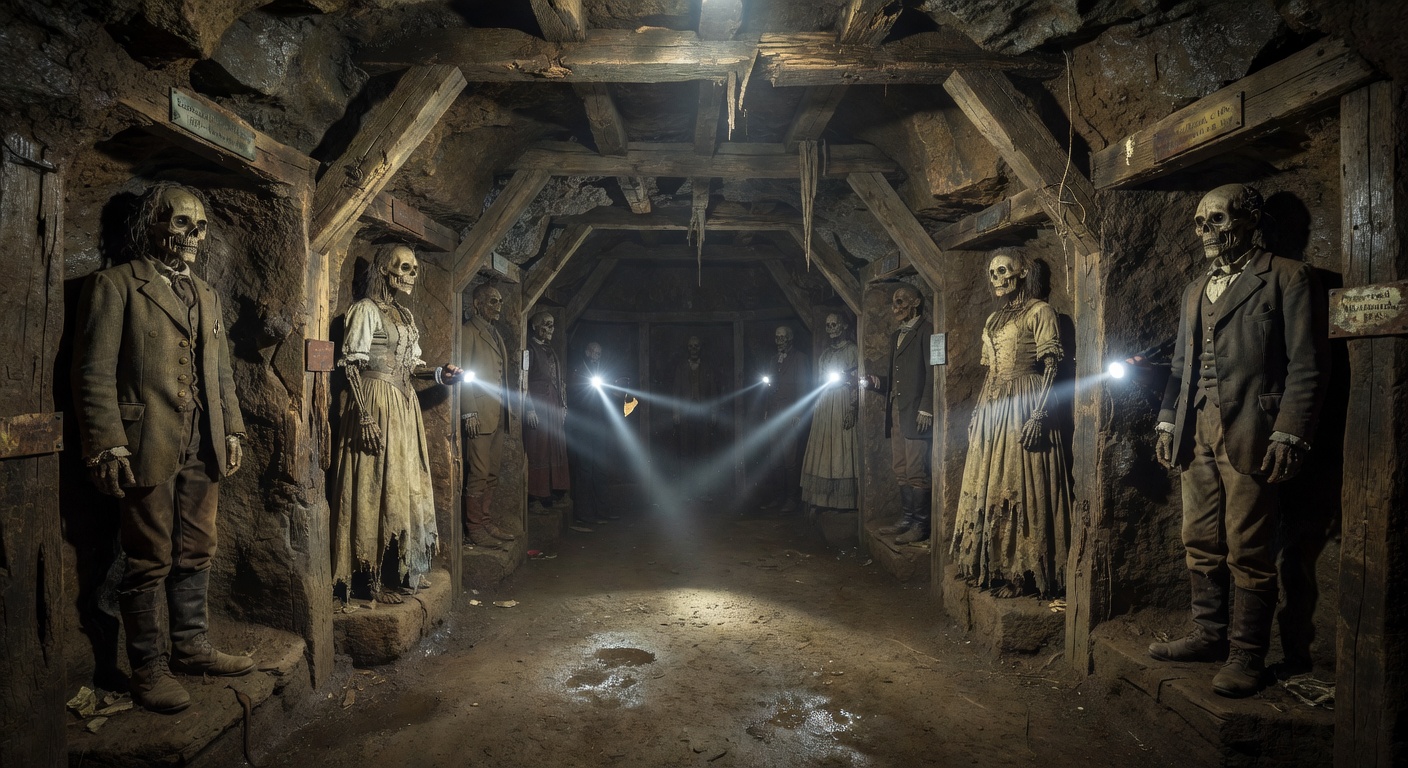
The space beyond was larger than it should have been, opening into a natural cavern that extended far beyond the building’s footprint. The walls weren’t brick or stone but raw earth, held back by timber supports that looked original to the building’s construction. And carved into those earthen walls, like a grotesque art gallery, were alcoves. Dozens of them, each one perfectly sized for a human body.
Most were empty. But not all.
The bodies were mummified, preserved by the constant temperature and dry air of the cavern. Some wore the rough clothing of mill workers from the 1890s. Others were dressed in styles from later decades—the 1920s, the 1940s, the 1960s. The most recent wore jeans and a t-shirt that couldn’t have been more than ten years old.
But it wasn’t the bodies that made my hands shake as I raised the camera. It was the way they’d been arranged. Carefully. Reverently. Each one positioned with arms crossed over the chest, eyes closed, faces peaceful. Someone had been tending to them. Maintaining them. Adding to the collection.
The Keeper
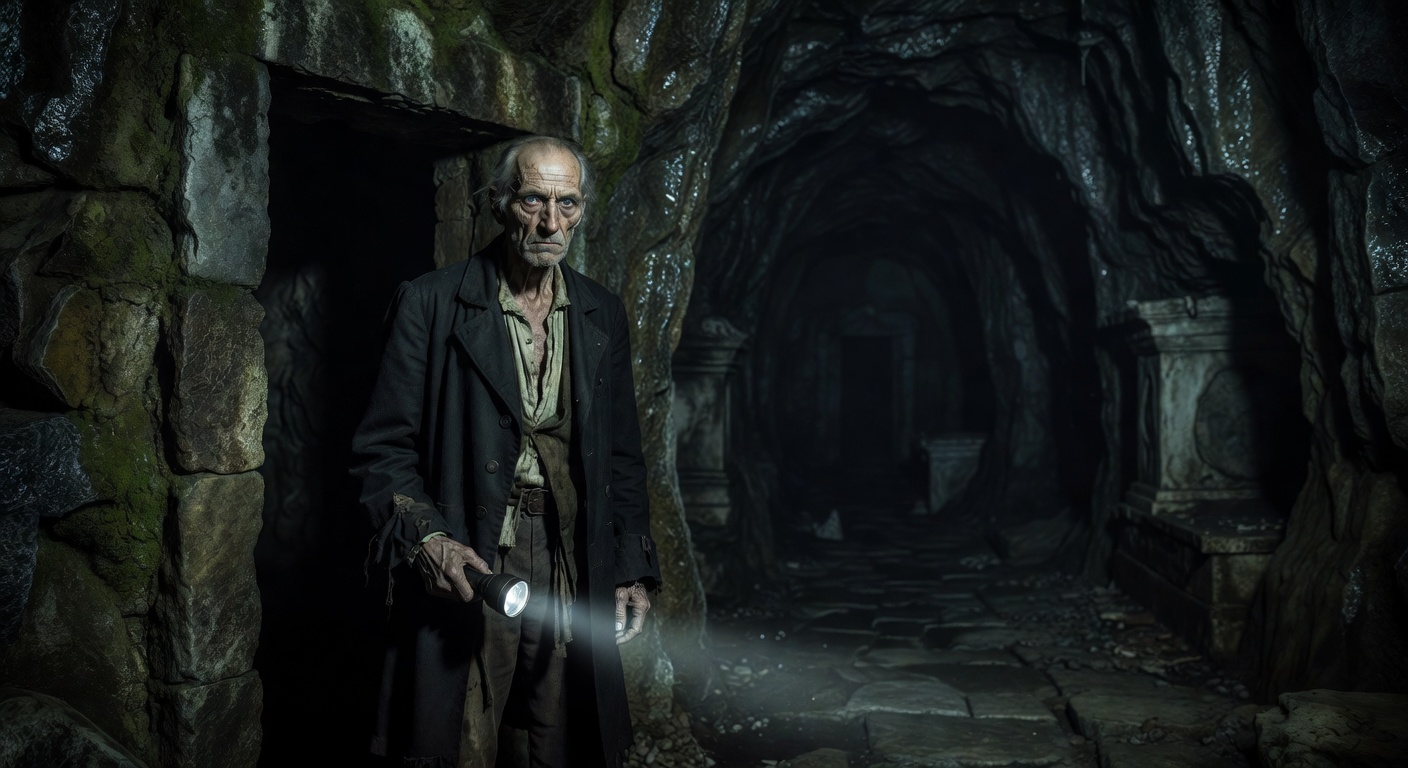
I heard the footsteps behind me before I saw him. Slow, deliberate, the sound of someone who belonged in this place. I turned to find an old man standing in the doorway of the cavern, his face illuminated by my flashlight beam. He was ancient, his skin like parchment, but his eyes were sharp and alert.
You shouldn’t be down here. This is a sacred place.
The old man
He spoke with the accent of old Providence, the kind you heard from families who’d been in the city for generations. His clothes were neat but outdated, as if he’d stepped out of 1950 and never bothered to change.
Sacred? You call this sacred? These are people. Dead people.
My voice, steadier than I felt
The Hartwell family has been caring for them for over a century. My grandfather started it. My father continued it. Now it’s my turn. They deserve peace, don’t you think?
The old man
The pieces fell together with sickening clarity. Marcus Hartwell hadn’t disappeared from Providence society. He’d gone underground. Literally. His family had been the keepers of this place, generation after generation, maintaining their ancestor’s terrible legacy.
The Weight of Truth
The old man—he introduced himself as Thomas Hartwell, great-grandson of Marcus—led me through the cavern with the pride of a museum curator. He showed me the original seven victims of the 1895 fire, explained how his great-grandfather had built the basement rooms to gradually accustom people to smaller and smaller spaces before bringing them down here.
It wasn’t murder, you understand. It was preservation. These people, they had hard lives. No hope. We gave them peace. Eternal rest in a place where they’re cared for, remembered.
Thomas Hartwell
He was insane, of course. But the methodical, careful kind of insane that can function in society for decades. The kind that pays property taxes and maintains historical records and makes sure the basement stays sealed so no one asks awkward questions.
I should have run. Should have called the police, the FBI, someone with the authority to deal with this nightmare. Instead, I found myself listening as Thomas explained the selection process, the careful observation of potential candidates, the gradual introduction to the basement rooms that served as a kind of psychological conditioning.
The city wants to tear down the building. But we can’t let that happen. These people need someone to watch over them. To keep them safe.
Thomas Hartwell
He looked at me with the expectation of someone who had just offered me the opportunity of a lifetime.
The Choice
Thomas Hartwell was eighty-seven years old. He’d been maintaining this place alone for the past twenty years, ever since his son had died in a car accident. He was tired, he said. Ready to join his ancestors in their eternal vigil. But first, he needed someone to take over. Someone who understood the importance of the work.
He’d been watching me, he explained. Studying my inspection reports, learning about my background, my character. I was thorough, careful, respectful of the past. I would make an excellent keeper.
The building doesn’t have to be condemned. You could buy it. The city would be happy to sell it to someone with your credentials. You could preserve this place, keep it safe.
Thomas Hartwell
The offer hung in the air between us like a poisonous cloud. Around us, the mummified bodies watched with empty sockets, waiting to see what I would choose. The weight of their presence pressed down on me, heavier than the tons of brick and mortar above our heads.
I thought about my own life. Forty-three years of examining other people’s foundations, other people’s structures. Never building anything of my own, never leaving a mark that would outlast me. Here was permanence. Here was purpose. Here was the chance to be part of something that had endured for over a century.
Thomas smiled as he saw the consideration in my eyes. He’d known I would understand. He’d chosen well.
Foundation
The Hartwell Building was purchased at auction three weeks later. The winning bid was submitted by a property development company that planned to convert it into luxury condominiums. The basement, according to the building permits, would be renovated into storage units and a fitness center.
Thomas Hartwell was found dead in his apartment on Federal Street the same day the sale went through. Natural causes, the medical examiner ruled. He was buried in Swan Point Cemetery, joining four generations of his family in the Hartwell plot.
I submitted my inspection report to the city as required. The building was structurally sound, I wrote. The foundation was solid. Some minor water damage in the basement, but nothing that couldn’t be addressed with proper waterproofing. I recommended approval for the renovation project.
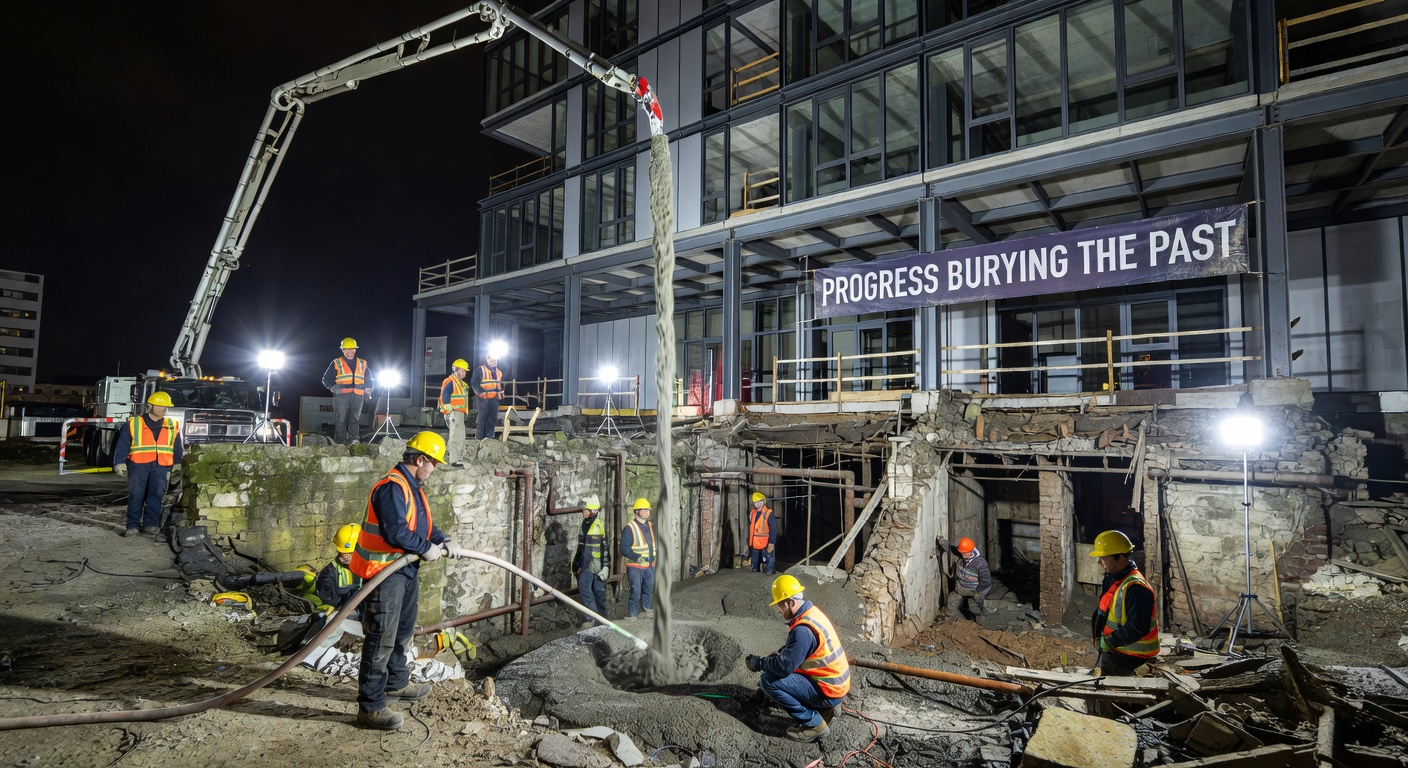
The new owners were pleased with the report. Construction began immediately. The basement was gutted, the old stone walls replaced with modern concrete. The cavern beyond the seventh door was filled with concrete and steel, sealed away forever beneath the weight of progress.
Some foundations are stronger when they’re disturbed. Others crumble when exposed to light.
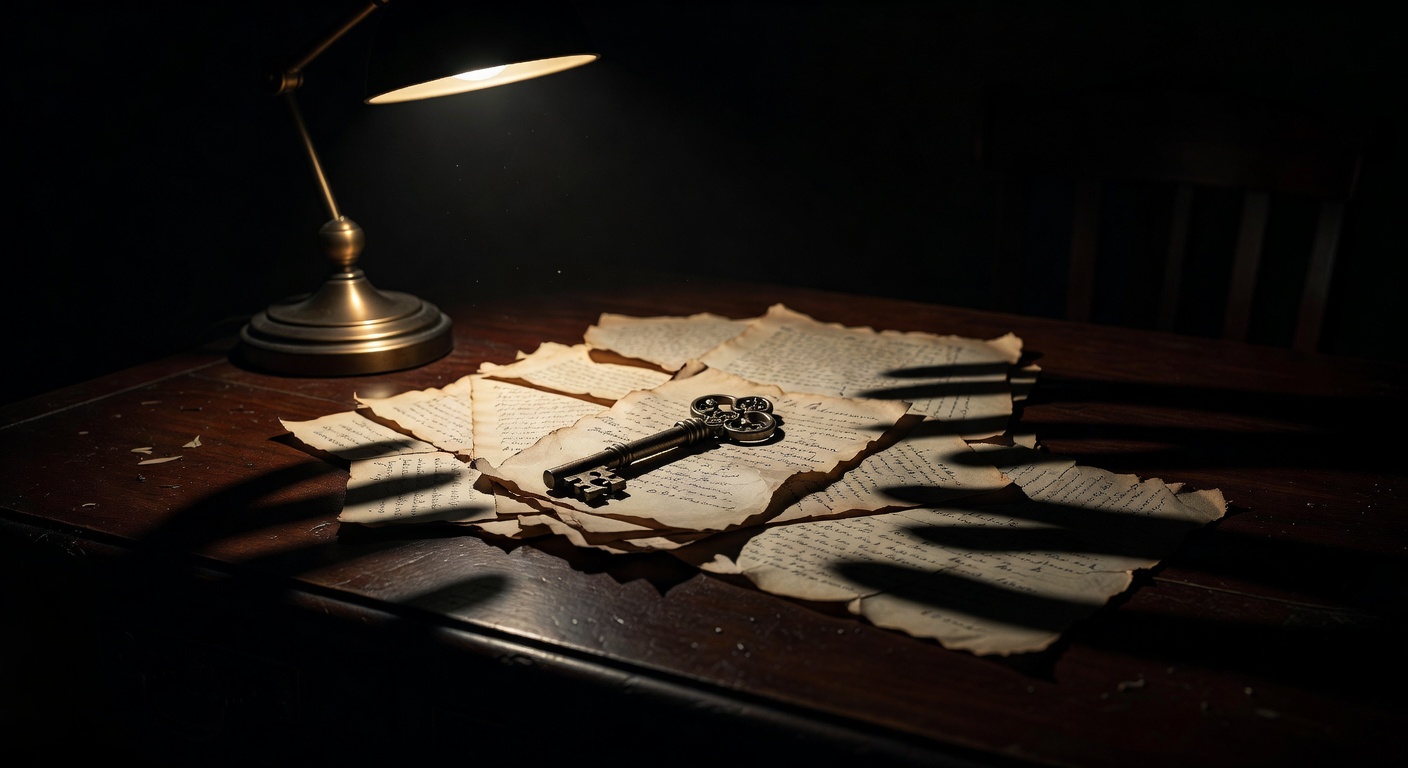
I kept the skeleton key. It sits on my desk now, a reminder of the choice I made and the weight I chose not to carry. Sometimes, in the quiet hours before dawn, I wonder if I made the right decision. If those souls found peace in their concrete tomb, or if they’re still waiting for someone to remember them.
The luxury condos sold out within six months. Young professionals, mostly, drawn by the building’s historic character and downtown location. They love the exposed brick walls, the original hardwood floors, the sense of living in a piece of Providence history. None of them know what lies beneath their feet. None of them hear the whispers that sometimes rise from the basement ventilation system on quiet nights.
But I hear them. And I carry their weight now, whether I chose to or not. Some responsibilities, once seen, can never be unseen. Some foundations, once examined, become part of your own structure. The Hartwell Building stands solid and profitable, its dark history buried beneath layers of modern convenience. But the weight below remains, pressing upward, waiting for someone to remember what was lost when the light finally reached those hidden places.
Glossary
Hartwell Building
A historic textile mill in Providence built in 1892, serving as the central location of the story
Marcus Hartwell
The original owner and builder of the Hartwell Building, who created the basement chambers
The Seven Rooms
Progressively smaller chambers in the basement used to psychologically condition victims
The Keeper
The hereditary caretaker role passed down through the Hartwell family
Thomas Hartwell
The elderly great-grandson of Marcus, the final keeper of the basement
The Cavern
The natural underground space behind the seventh door where bodies were preserved
Providence Fire of 1895
The incident that claimed the first seven victims and established the pattern
Foundation Inspection
The professional assessment that leads to the discovery of the basement's secrets
The Weight Below
The metaphorical and literal burden of the buried truth beneath the building