Some procedures are written in blood
You arrive at Greystone Care Facility on a Tuesday morning in October, your new ID badge still warm from the laminator. The orientation packet weighs heavy in your hands—thirty-seven pages of protocols, procedures, and patient care guidelines. The administrator, Mrs. Chen, walks you through corridors that smell of industrial disinfectant and something else. Something organic and unpleasant beneath the chemical tang.
Never enter a patient room alone after 9 PM. Always work in pairs during night shifts. If a patient asks you to come closer, maintain at least six feet of distance.
Mrs. Chen, reading from the manual
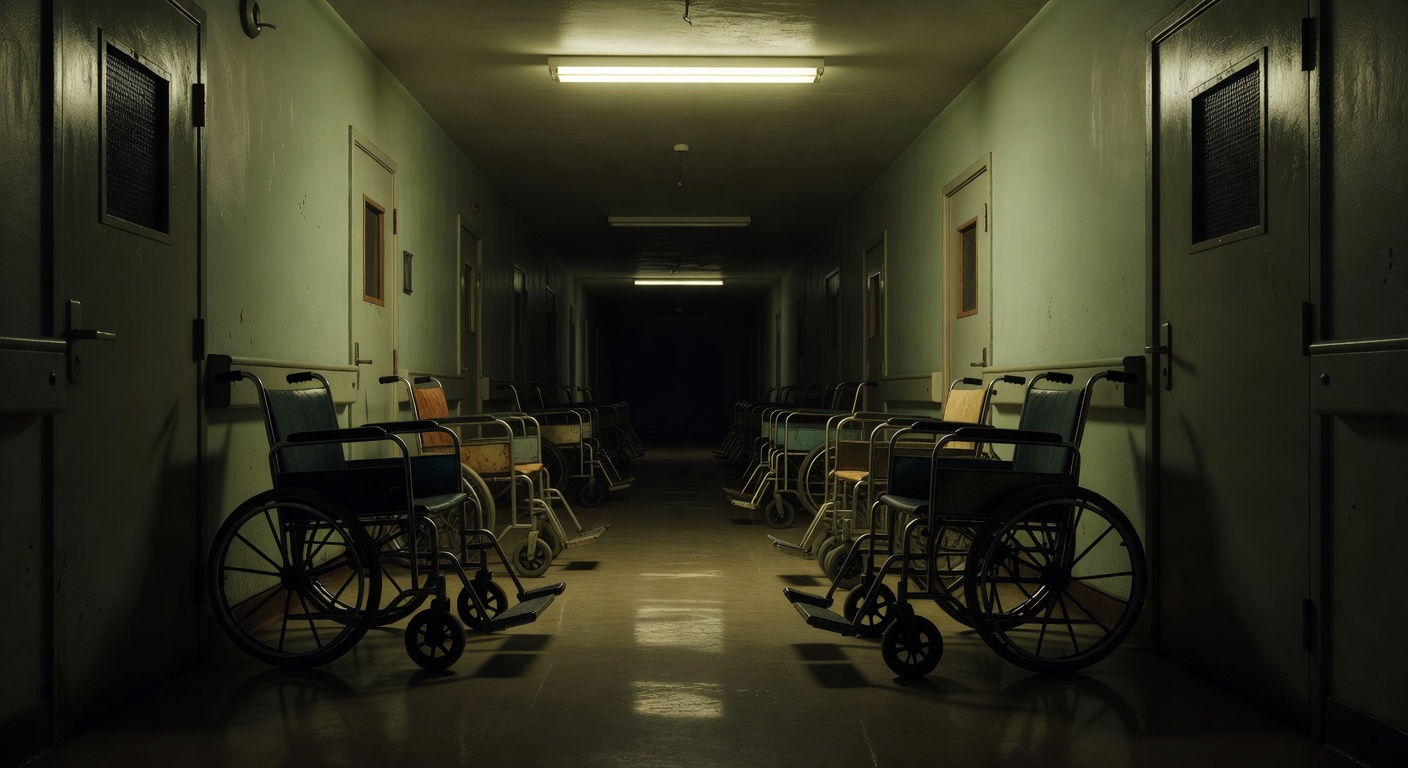
The rules seem excessive for a long-term care facility. You’ve worked in hospitals before, dealt with dementia patients and aggressive cases. But Mrs. Chen’s tone carries weight that makes you pay attention. She stops at Ward C, where the fluorescent lights cast everything in sickly yellow. The patients here are different. They sit too still in their wheelchairs, eyes tracking your movement with predatory focus.
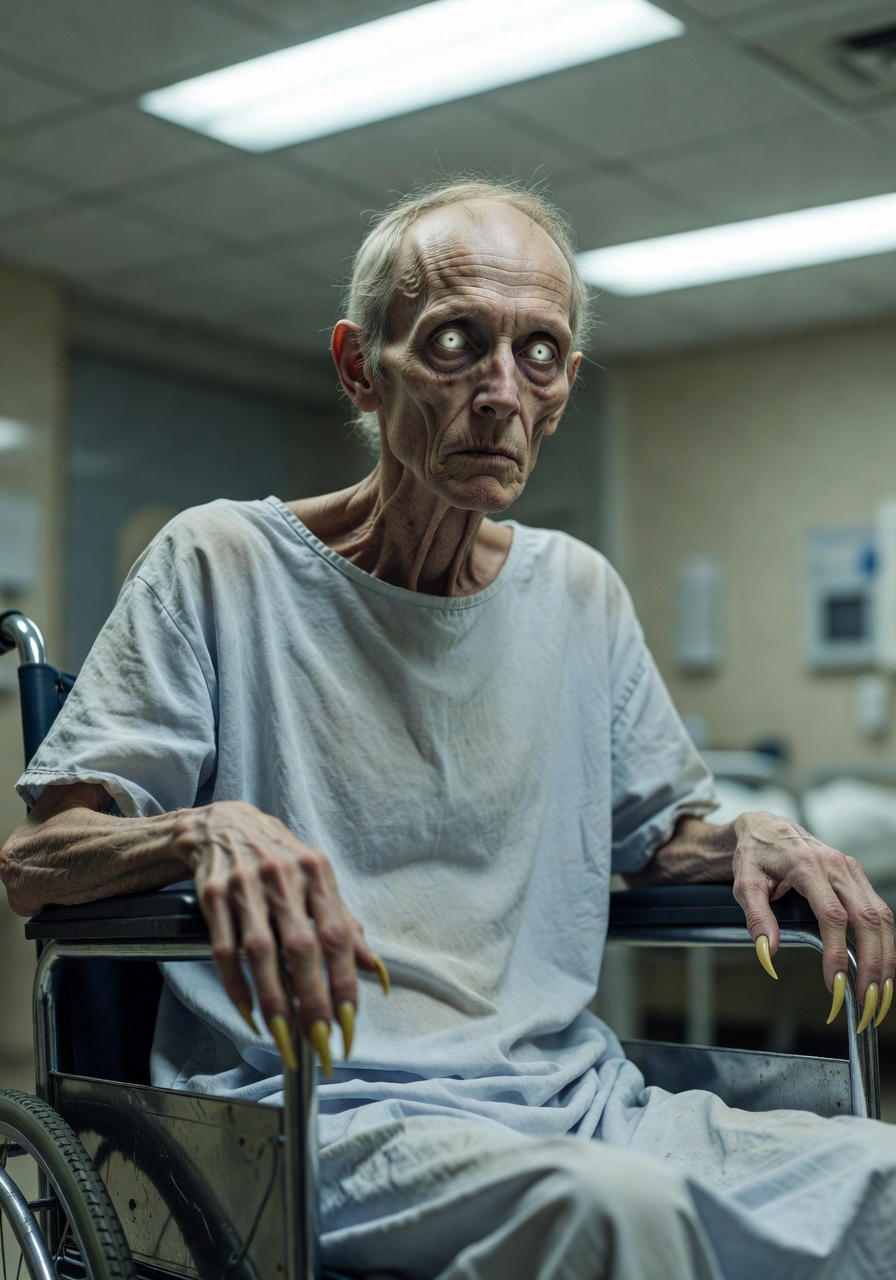
Room 314 houses Mr. Garrett, a man in his seventies with liver spots and thinning white hair. His chart lists him as catatonic, but when you check his vitals, his grip on your wrist is firm. Too firm. His fingernails have grown long and yellowed, curving like talons. The chart doesn’t mention nail care, which strikes you as odd. Every facility maintains basic grooming standards.
The medication schedule is non-negotiable. Every patient receives their evening dose at exactly 8:30 PM. No exceptions, no delays.
Day shift supervisor
Night Shift
Your first night shift begins at 11 PM. The facility transforms after dark—sounds carry differently, shadows stretch longer, and the patients become restless. Sarah, your partner for the evening rounds, has worked here for three years. She moves through the corridors with practiced efficiency, checking locks you didn’t know existed on the patient room doors.
In Ward C, Mrs. Hoffman sits upright in her bed despite being listed as bedridden. Her eyes follow you both as you enter, but she doesn’t speak. The medication chart shows she receives something called Compound 7-Alpha, a drug you’ve never heard of in fifteen years of nursing. Sarah administers it through an IV port, and within minutes, Mrs. Hoffman’s rigid posture relaxes. She lies back down, but her eyes remain open, staring at the ceiling.
Don’t ask about the medications. Don’t look up the compounds. Just follow the protocols.
Sarah, whispering in the hallway
At 3 AM, the emergency call button lights up in Room 318. Mr. Davidson’s room. Sarah grabs your arm before you can respond, her fingers digging into your scrubs. The call button blinks red in the darkness, but she shakes her head. The protocol manual states clearly: no response to calls between 2 AM and 5 AM unless specifically authorized by the night supervisor.
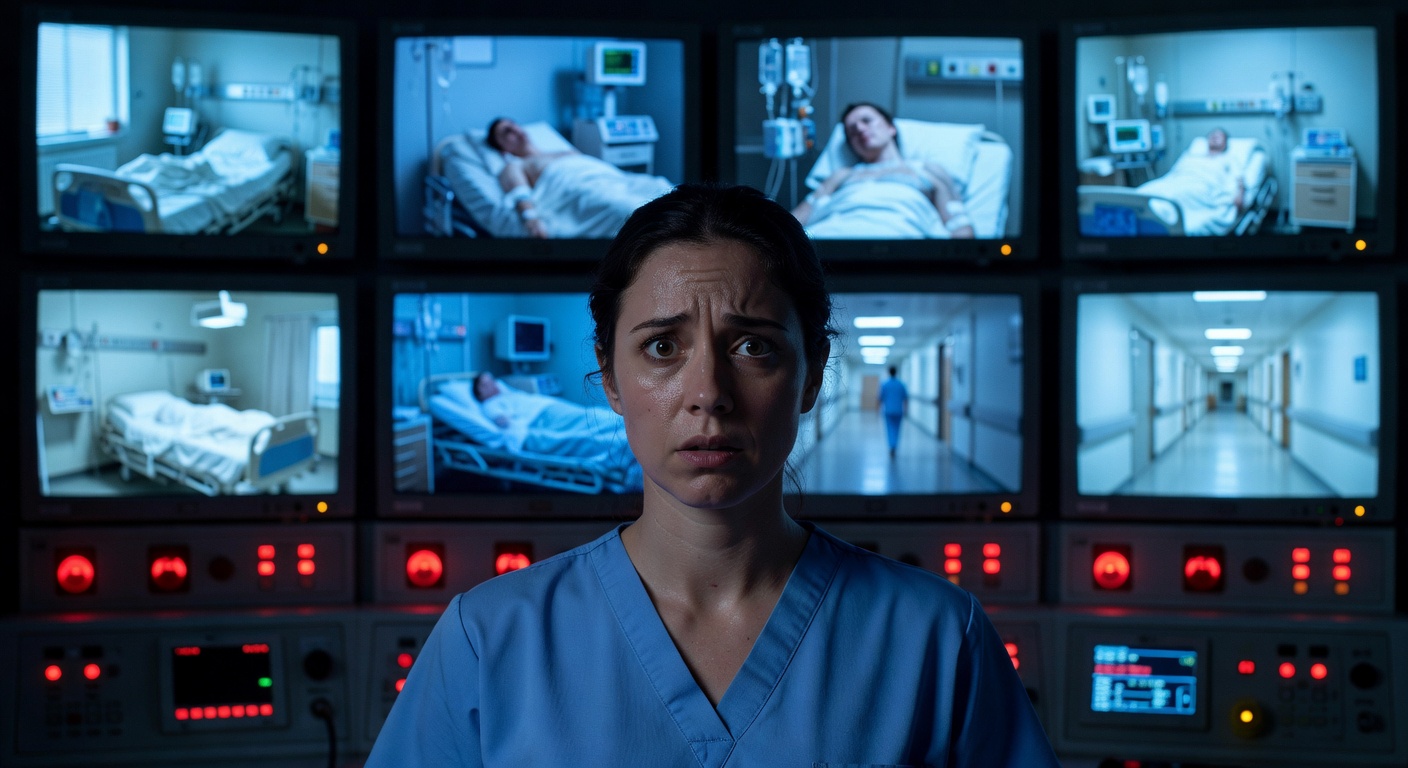
You watch the security monitor. Mr. Davidson stands beside his bed, pressing the call button repeatedly. His movements are jerky, unnatural, like a marionette controlled by an amateur puppeteer. His mouth opens and closes, but no sound comes through the intercom. After twenty minutes, he stops pressing the button and returns to bed. His movements become fluid again, human.
The Files
During your lunch break, you access the patient database from the nurses’ station. The files are heavily redacted, black bars covering sections of medical history and admission notes. What remains tells fragments of stories—car accidents, drownings, house fires. All the patients in Ward C died before arriving at Greystone. The admission dates match their death certificates exactly.
PATIENT: Garrett, William H.
ADMISSION DATE: March 15, 2019
CAUSE OF DEATH: Cardiac arrest following MVA
STATUS: Stabilized via Protocol 7
NOTES: [REDACTED] responds well to evening medication regimen. Maintains baseline cognitive function during daylight hours. [REDACTED] aggressive tendencies managed through environmental controls.
The pieces fall into place with horrible clarity. The locked doors, the unusual medications, the strict protocols about night interaction. Greystone isn’t a care facility—it’s a containment center. The patients aren’t alive in any conventional sense, but they’re not quite dead either. Something keeps them animated, aware, trapped between states.
The dead don’t rest here. They wait.
Protocol Breach
On your third week, the medication delivery arrives late. The evening doses are delayed by two hours, and you watch the patients change. Mr. Garrett’s eyes grow brighter, more focused. Mrs. Hoffman begins speaking for the first time since you arrived, but her words are in a language that predates any you recognize. The sounds scrape against your eardrums like fingernails on bone.
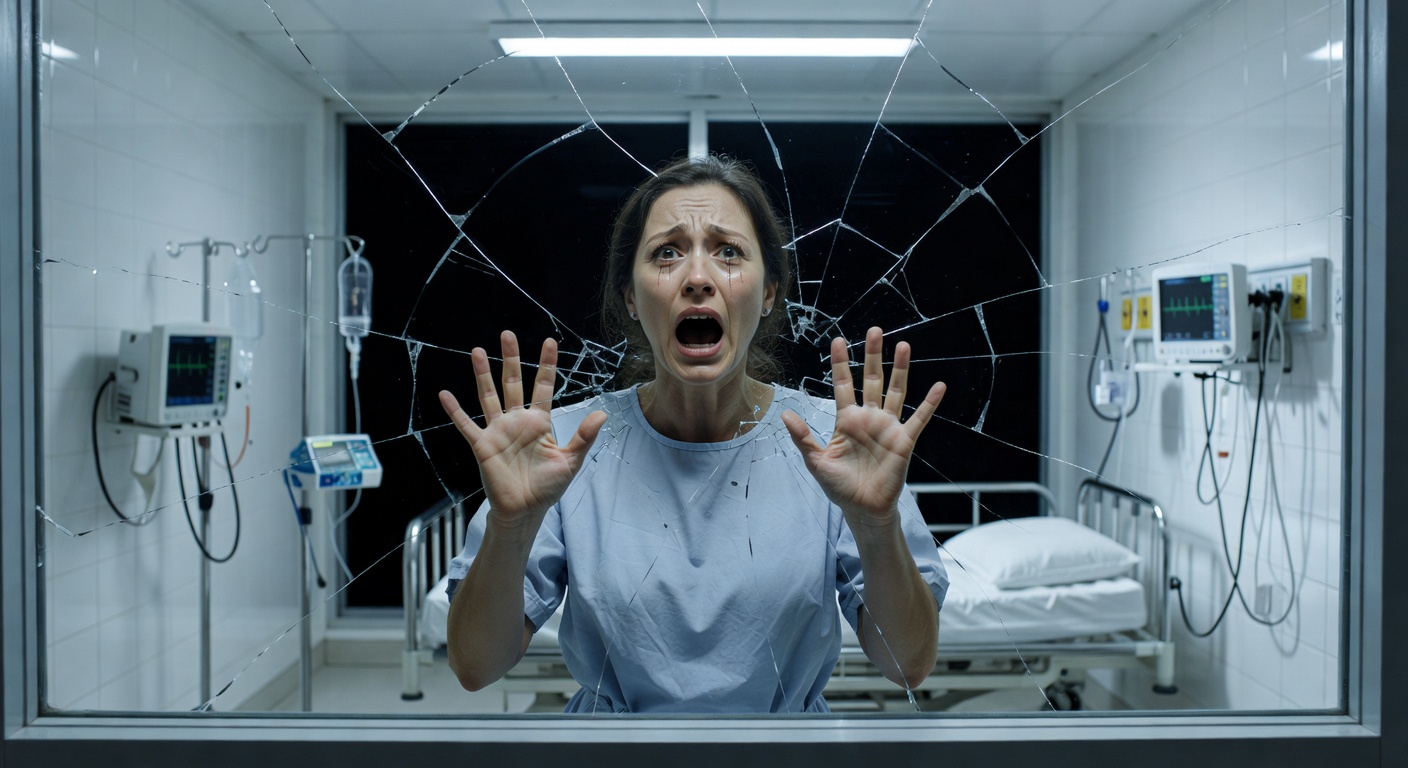
Sarah moves quickly through the ward, administering the delayed medications, but the damage is done. Room 322 houses Mrs. Kellerman, a woman who died in a nursing home fire in 1987. She stands at her window, hands pressed against the reinforced glass, mouth moving in what might be prayer or curse. The glass begins to crack under her palms.
They remember when the medication wears off. They remember everything—dying, the pain, the fear. And they remember what was done to bring them back.
Sarah, checking the locks on the ward doors
The facility’s true purpose becomes clear through whispered conversations and overhead fragments. Greystone is a research center, funded by government contracts and private medical corporations. The patients are test subjects for experimental reanimation protocols, their bodies preserved and animated through chemical intervention. The medications don’t heal—they suppress the rage and confusion that comes with forced resurrection.
You find the original research proposal in Dr. Hutchinson’s unlocked office. The project aims to develop battlefield medical applications, methods to keep soldiers functional after catastrophic injuries. The ethical review board rejected the proposal in 1982. Greystone opened anyway, operating under a series of shell companies and false permits. The patients are sourced from morgues, funeral homes, and hospitals—people with no families to ask questions.
The Choice
Dr. Hutchinson finds you reading the files. He’s a thin man with wire-rimmed glasses and the pallor of someone who spends too much time under fluorescent lights. His lab coat is pristine white, but his hands shake when he pours himself coffee from the break room machine. He doesn’t seem surprised to see you with the documents.
You can leave tonight. Clean resignation, good references, a bonus for your discretion. Or you can stay and help us perfect the process. The applications are limitless—trauma surgery, organ preservation, emergency medicine.
Dr. Hutchinson
The offer hangs in the air between you. Outside, Ward C settles into its medicated quiet, thirty-seven people who should be at rest but instead exist in pharmaceutical limbo. Their families buried empty caskets or scattered ashes while their loved ones were harvested for science. The research continues, funded by agencies that don’t officially exist and corporations that profit from death.
You think about Mrs. Kellerman’s cracked window, about Mr. Garrett’s grip on your wrist, about the sounds Mrs. Hoffman makes in languages that died with ancient civilizations. They’re conscious enough to suffer but medicated enough to comply. The perfect test subjects for humanity’s attempt to conquer mortality.
Your badge still works. The exit doors will open for you. But walking away means leaving thirty-seven souls trapped in medical purgatory, and staying means becoming complicit in their torment. Dr. Hutchinson waits for your answer, his coffee growing cold in his trembling hands. In Ward C, the patients sleep their chemical sleep, dreaming whatever dreams the dead can manage. The choice is yours, and either way, you’ll carry the weight of what you’ve seen.
Glossary
Greystone Care Facility
A clandestine research center masquerading as a long-term care facility, conducting illegal reanimation experiments
Ward C
The containment ward housing reanimated patients, secured with reinforced locks and monitoring systems
Compound 7-Alpha
Experimental medication used to suppress consciousness and aggression in reanimated subjects
Protocol 7
The facility's reanimation process that keeps deceased subjects in a state between life and death
Dr. Hutchinson
The lead researcher overseeing the reanimation experiments at Greystone
Night Protocols
Strict behavioral guidelines for staff during overnight hours when medication effects are weakest