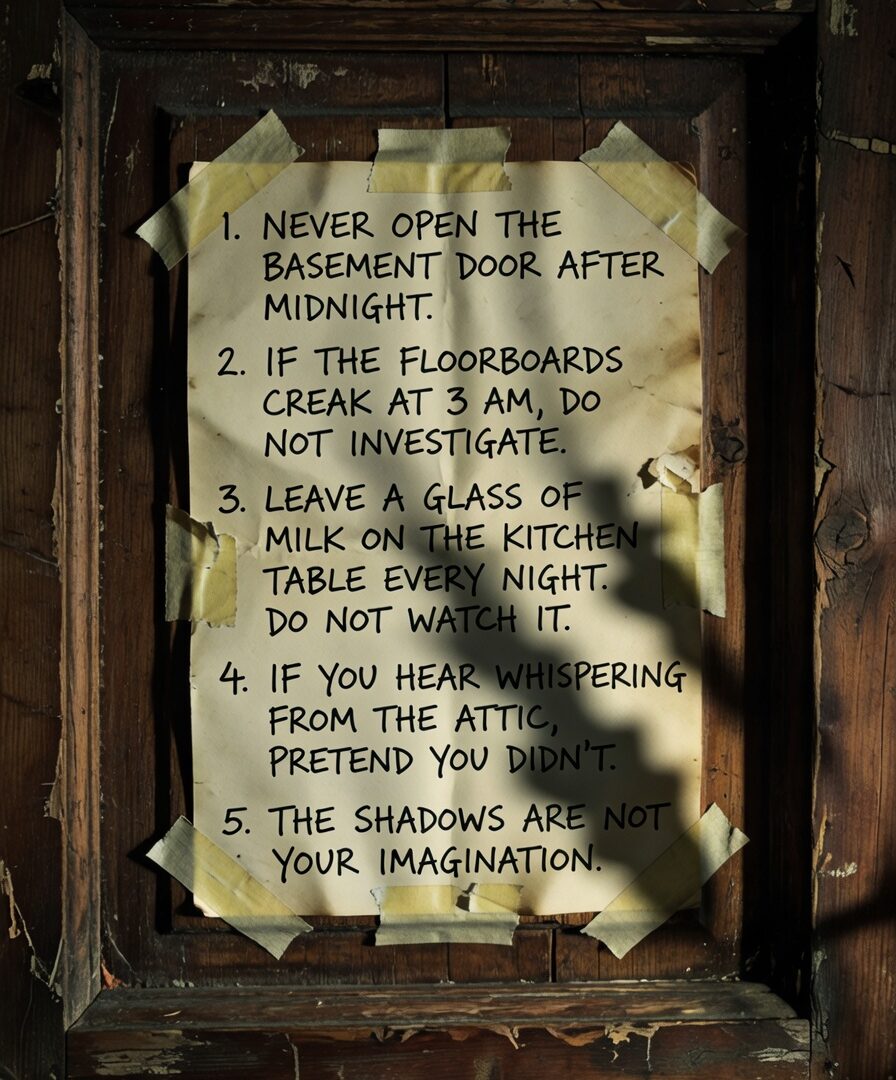
Some places have their own gravity, and once you feel the pull, you can't unfeel it.
The cabin looked perfect in the photos. Too perfect, maybe, but Sarah and I needed somewhere to decompress after eighteen months of hell at the firm. The kind of hell where you forget what trees look like and start measuring time in billable hours. Our daughter Emma had just turned eight and deserved parents who remembered her name without checking their phones first.
The drive took us four hours into the Oregon Cascades, each mile taking us further from cell towers and closer to something that felt like breathing again. The rental description had been sparse but promising: ‘Secluded mountain retreat. Perfect for families seeking authentic wilderness experience. House rules strictly enforced.’ That last bit should have been a red flag, but we were desperate for authentic anything.
The property sat at the end of a gravel road that seemed to go on forever, flanked by Douglas firs that blocked out most of the afternoon sun. The cabin itself was solid timber construction, probably built in the seventies, with a wraparound porch and windows that reflected the forest like dark mirrors. Emma bounced out of the car and ran straight for the porch swing. Normal kid behavior. Everything felt normal.
The keys were under the mat, as promised. Inside, the cabin was clean but lived-in, with that particular smell of wood smoke and old books that expensive hotels try to bottle and fail. The furniture was mismatched but comfortable, the kind of place where you could actually relax. Sarah found the kitchen well-stocked with basics. Emma discovered a loft bedroom with slanted windows that made her squeal with delight.
The List
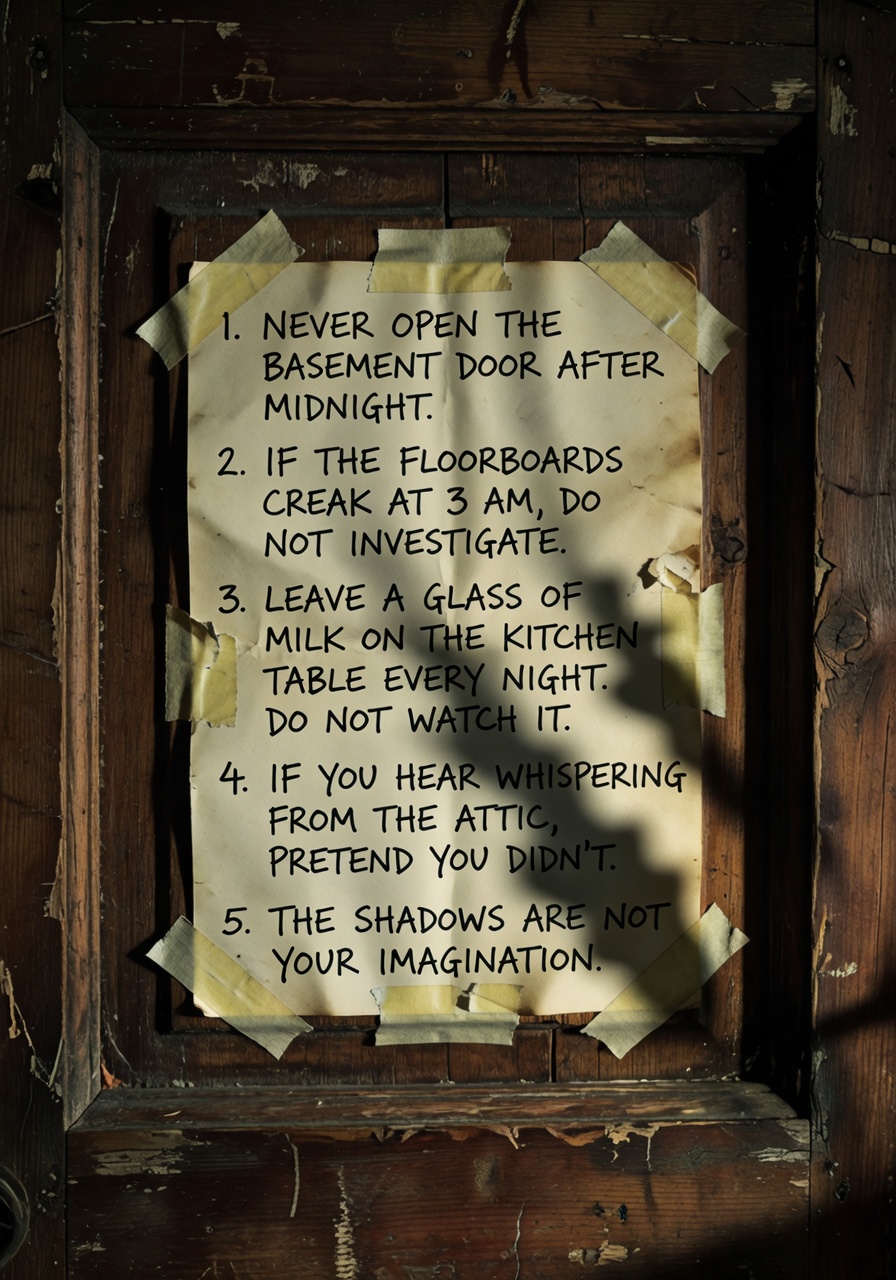
I found the first note taped to the inside of the front door. Handwritten in careful block letters on index card stock, like something from a different decade. The kind of penmanship they don’t teach anymore.
HOUSE RULES - PLEASE READ CAREFULLY

1. Do not go outside between 10 PM and 6 AM
2. Keep all curtains closed after sunset
3. If you hear scratching on the roof, DO NOT investigate
4. The basement door stays locked at all times
5. Do not acknowledge voices that call from outside
6. If the lights flicker three times, count to thirty before moving
7. Emma must not play alone in the loft after 8 PM

Thank you for your cooperation.
- Management
I stared at that list for a full minute. The specificity bothered me more than the content. Most vacation rentals have rules about noise and cleaning, maybe something about the hot tub. This read like instructions for surviving a siege.
Honey, you need to see this.
David
Sarah read over my shoulder, her lawyer brain dissecting each line with professional skepticism. Emma tried to read it too, sounding out the bigger words with the determined focus of a second-grader.
Why can’t I play in the loft after eight? That’s not even my bedtime.
Emma
It’s probably insurance liability stuff. Old houses have weird rules.
Sarah
But I could see she didn’t believe it either. The basement door had three separate deadbolts, all keyed differently. The windows had heavy curtains that looked like they’d been installed specifically to block out light, not let it in. And that seventh rule—mentioning Emma by name when we’d never spoken to anyone about bringing a child.
First Night
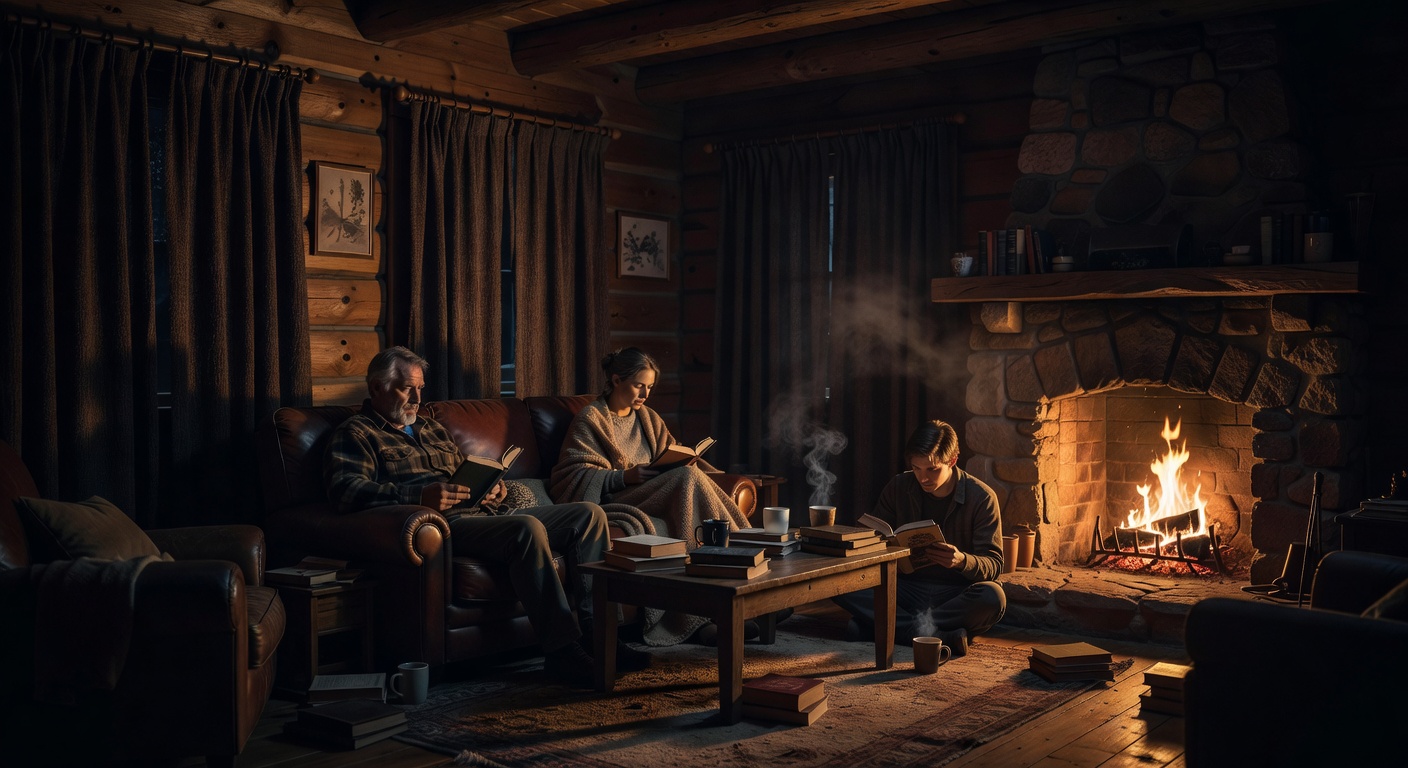
We made dinner and tried to pretend the rules were quirky cabin character. Emma helped Sarah with a jigsaw puzzle while I built a fire that filled the main room with warm, dancing light. By eight o’clock, Emma was yawning, and we sent her to brush her teeth. The loft bedroom was directly above us, and we could hear her moving around, settling in.
At 8:15, she called down that she was ready for a story. Sarah went up while I finished the dishes. Normal family routine in an abnormal place. I was drying the last plate when I heard Emma giggle, then Sarah’s voice, patient and warm, beginning the story of the three bears.
At 9:30, the scratching started.
Soft at first, like branches in the wind, but there was no wind. The sound moved across the roof in deliberate patterns, back and forth above the main room where Sarah and I sat reading. She looked up from her book, eyebrows raised in question.
Probably just squirrels.
Sarah
But squirrels don’t scratch in methodical lines. They don’t pause for exactly ten seconds between each pass. And they don’t make sounds like fingernails on wood, drawing out long, patient grooves in the cedar shingles above our heads.
I remembered rule number three. Do not investigate. The rational part of my brain wanted to grab a flashlight and check the roof line, maybe throw a few rocks to scare off whatever was up there. But something deeper, older, told me to stay put. To trust the rules written by someone who knew this place better than I did.
The scratching stopped at exactly 10 PM. Sarah and I looked at each other across the coffee table, both of us pretending we hadn’t been counting the minutes. We closed the curtains—all of them, heavy fabric that blocked out the forest entirely. Rule number two, followed without discussion.
We went to bed early, but sleep came hard. The cabin settled around us with creaks and sighs that sounded almost like conversation. At some point in the deep hours, I woke to Emma’s voice drifting down from the loft.
I can’t come out to play right now. Daddy says I have to stay inside.
Emma
Sarah was still asleep beside me. I lay still, listening, but heard nothing else. Just the sound of my own heartbeat and the whisper of wind through trees that shouldn’t have been audible through the closed windows.
Day Two
Morning brought coffee and pancakes and Emma’s excited chatter about a dream where forest animals invited her to a tea party. Normal kid stuff. Sarah and I exchanged glances but didn’t mention the scratching or the voice in the night. We spent the day hiking, exploring the creek that ran behind the property, letting Emma collect smooth stones and interesting leaves.
But as afternoon faded toward evening, the forest grew quieter. Not the peaceful quiet of nature, but the held-breath silence of something waiting. Emma noticed it too, staying closer to us, her usual boundless energy replaced by an unusual stillness.
We were back inside by six, curtains drawn by seven. Emma went to bed without argument, unusually compliant. Sarah and I settled in for another evening of pretending everything was normal.
At 9:45, the lights flickered once. Twice. Three times.
I started counting without thinking. One Mississippi. Two Mississippi. The house fell into absolute silence, as if someone had thrown a switch that turned off not just sound but the possibility of sound. Sarah froze with her coffee cup halfway to her lips. I kept counting. Fifteen Mississippi. Twenty Mississippi.
At thirty, I exhaled. The normal sounds of the house returned like someone had pressed play on a recording. The refrigerator hummed. The fire crackled. Sarah set down her cup with hands that trembled just slightly.
We need to talk about leaving.
Sarah
But even as she said it, I could see she didn’t mean it. Not really. Because leaving would mean admitting that the rules made sense, that we were following instructions written by someone who understood something we didn’t. And that admission came with questions we weren’t ready to answer.
The Voice
It came just after midnight on the third night. Emma’s voice, clear and sweet, calling from outside the front door.
Mommy? Daddy? I’m scared. Can you let me in?
The voice
Sarah bolted upright in bed. I grabbed her wrist before she could move, both of us listening to our daughter’s voice pleading from the porch. The voice that couldn’t be our daughter’s because Emma was asleep in the loft directly above us, her breathing soft and regular through the thin ceiling.
Please, I’m cold. I don’t know how I got outside.
The voice
Sarah’s whole body tensed like a spring wound too tight. Every parental instinct screamed at her to run to that door, to throw it open and gather her frightened child into her arms. But we both knew Emma was upstairs. We both knew the rules.
Rule number five: Do not acknowledge voices that call from outside.
The voice tried for twenty minutes, cycling through every emotional manipulation in the book. Tears. Anger. Desperate pleading. Perfect mimicry of our daughter’s speech patterns, her little-girl pronunciation of certain words. But Emma slept on above us, undisturbed, while something else wore her voice like a stolen coat.
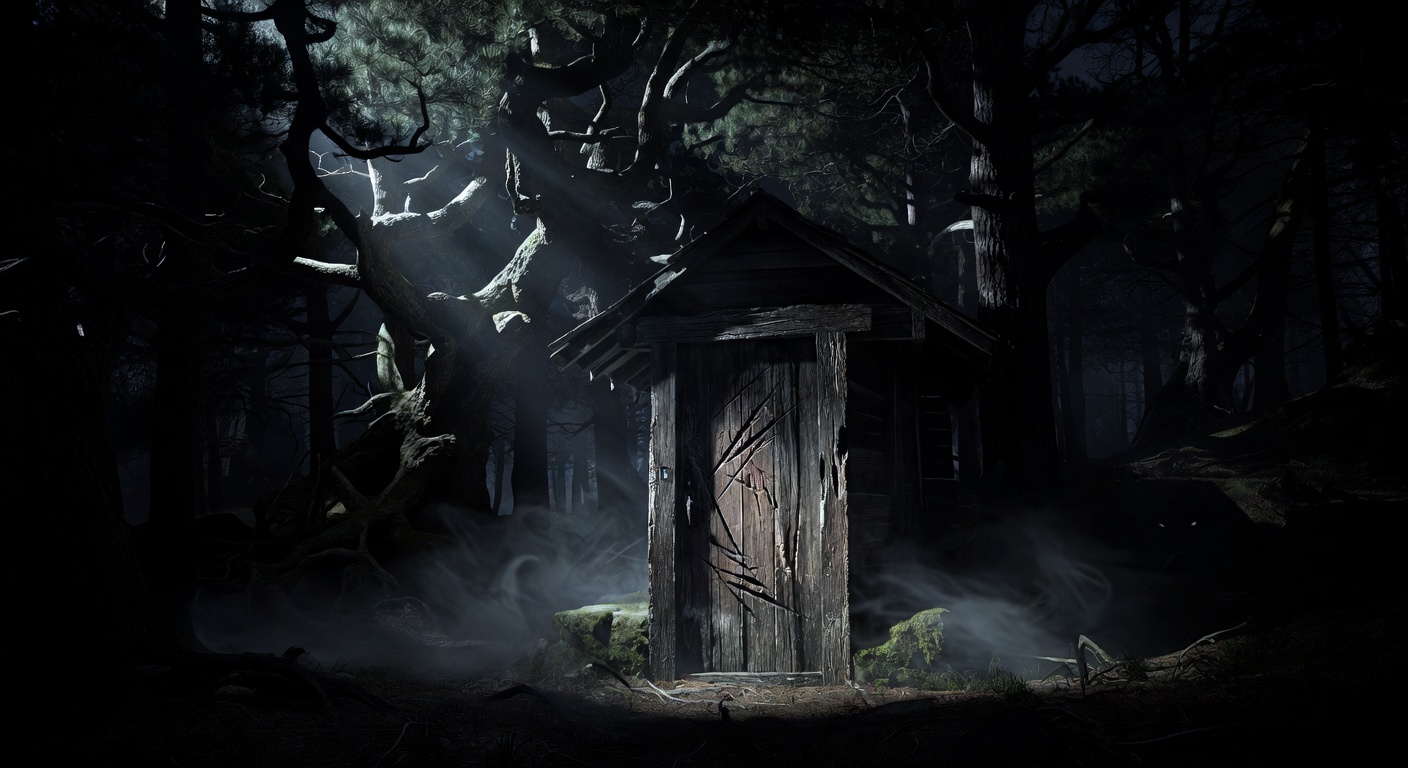
Morning came eventually. We found scratches around the door frame, long gouges in the wood that looked like fingernails. Or claws. Sarah packed our bags without speaking, moving with the efficient precision she used in court when a case was going badly.
We’re leaving. Now.
Sarah
But the car wouldn’t start. The engine turned over fine, all the systems working perfectly, but it wouldn’t catch. Like something essential was missing, some spark that would carry us away from this place. I popped the hood and found everything exactly as it should be. Battery charged. Fluids full. No obvious problems.
We tried Sarah’s phone. No signal, which wasn’t unusual this deep in the mountains. But my phone, which had shown one bar the day before, now displayed nothing at all. Not even the emergency signal that’s supposed to work anywhere.
Emma found us standing beside the useless car, looking lost and increasingly desperate. She skipped over with the unconscious confidence of a child who trusts her parents to handle everything.
Are we staying longer? I like it here. The house is friendly.
Emma
Understanding
That’s when I understood. Not all at once, but like watching sunrise creep across a landscape, revealing details that had been there all along. The rules weren’t restrictions. They were accommodations. A peace treaty between us and something that had been here longer than the cabin, longer than the roads, longer than the names we give to places.
The scratching on the roof wasn’t threatening. It was checking. Making sure we were following the rules, staying safe inside the boundaries that kept both sides of the agreement happy. The voice at the door wasn’t trying to fool us into letting it in. It was testing whether we understood the terms of our stay.
We could leave, eventually. But only when we’d learned what this place wanted to teach us. Only when we’d proven we could coexist with something that didn’t fit into our neat categories of possible and impossible.
Some places have their own gravity, and once you feel the pull, you can’t unfeel it.
The car started on the fourth morning. Sarah’s phone found signal as we reached the main road. Emma chattered about her favorite parts of the trip—the creek, the loft bedroom, the dreams where forest animals invited her to tea parties that felt more real than real.
We drove home to our normal life in our normal city, but something had changed. We followed rules now without thinking about them. We closed curtains after dark. We didn’t investigate strange sounds. We listened more carefully to the voices that called from outside our understanding.
And sometimes, late at night, I find myself missing the scratching on the roof. The certainty of boundaries clearly marked. The honesty of a place that told you exactly what it expected and asked only that you pay attention.
We kept the list of rules. Sarah framed it and hung it in our kitchen, where Emma can see it every morning before school. A reminder that some agreements run deeper than contracts, and some places choose their occupants as much as we choose them.
The cabin is still there, still taking reservations through the same website. The listing hasn’t changed: ‘Secluded mountain retreat. Perfect for families seeking authentic wilderness experience. House rules strictly enforced.’ We haven’t been back. But we will. Emma asks about it sometimes, usually when the city feels too bright and too loud and too certain of itself.
When can we visit the friendly house again?
Emma
Soon, I tell her. When we’re ready to remember what we learned there. When we need to practice being small in a world that’s bigger and stranger than we pretend. When we’re ready to follow the rules again.
Glossary
The Cascades
Mountain range in Oregon and Washington, known for dense forests and remote wilderness areas
House Rules
The specific written instructions found in the cabin, designed to ensure safe coexistence with unknown forces
The Voice
An entity that mimicked Emma's voice to test the family's understanding of the rules
The Scratching
Methodical sounds on the roof that served as a nightly check rather than a threat
The Agreement
An unspoken understanding between human visitors and the ancient presence inhabiting the area
Emma
The narrator's eight-year-old daughter, who seems naturally attuned to the cabin's unusual nature
Accommodation
The narrator's realization that the rules exist to facilitate peaceful coexistence, not to restrict or control